
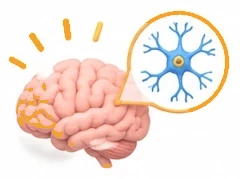
About 86 billion neurons
A careful count of the adult human brain found about 86 billion neurons and a similar number of non-neuronal cells (Azevedo et al., 2009). An adult brain weighs roughly 3 pounds (about 1.3 to 1.4 kg).
A plain-language tour of what the brain is made of, how its parts work together, and the chemical messengers it uses to communicate.
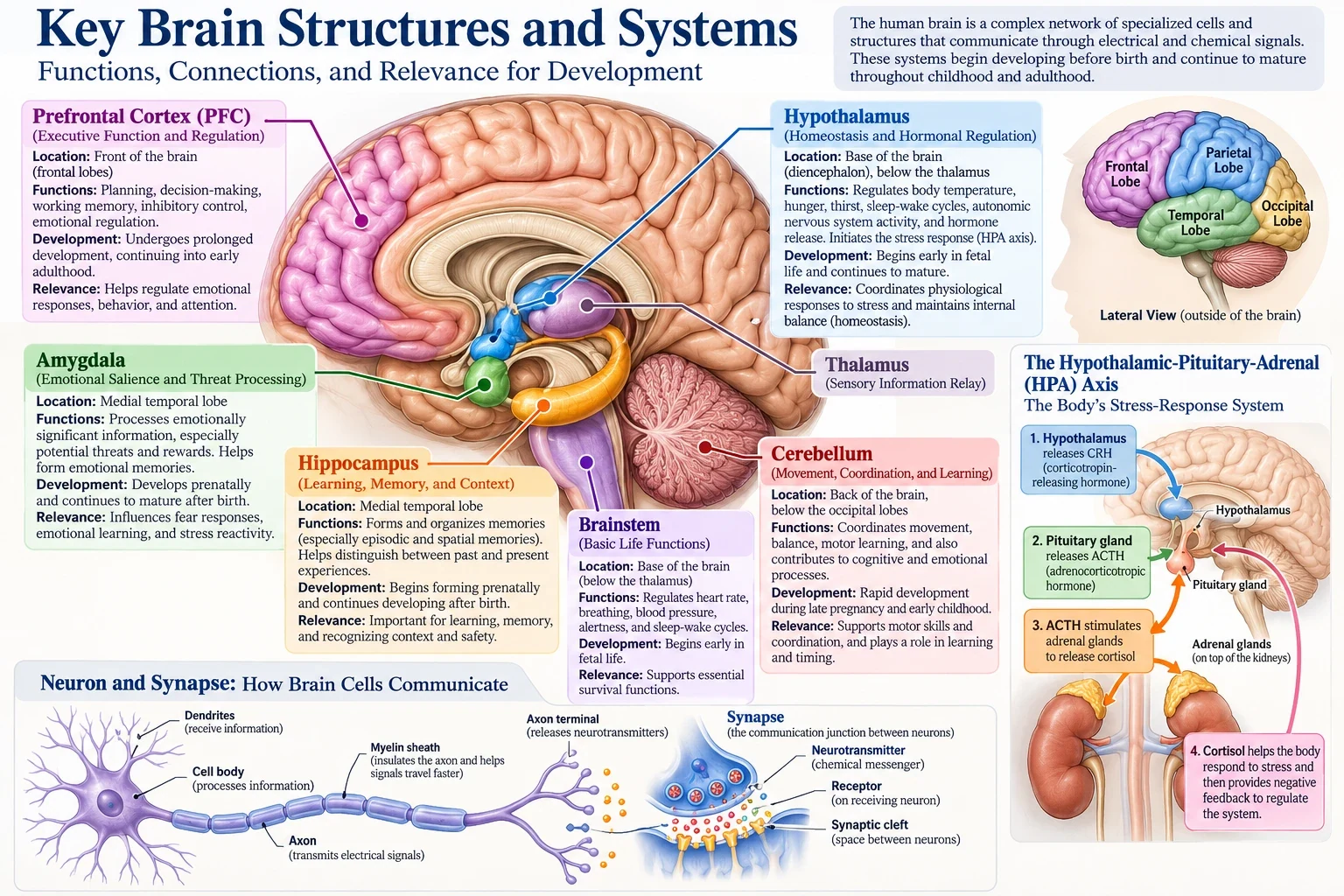
A careful count of the adult human brain found about 86 billion neurons and a similar number of non-neuronal cells (Azevedo et al., 2009). An adult brain weighs roughly 3 pounds (about 1.3 to 1.4 kg).
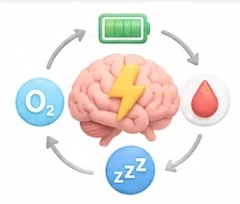
The brain is about 2% of body weight but uses about 20% of the body’s energy (Raichle & Gusnard, 2002). Steady fuel, oxygen, blood flow, and sleep all matter for how well it works.
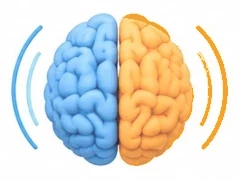
Some functions lean to one side. Language, for example, is more often on the left, and attention networks more on the right. But a study of over 1,000 brain scans of children and young adults found no sign that people have a stronger left-side or right-side network overall (Nielsen et al., 2013).
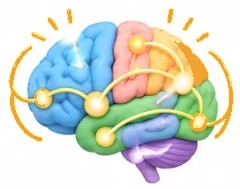
No single brain area acts alone. Thoughts, feelings, and actions come from networks of regions that talk to each other all the time.
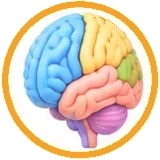
The largest part of the brain, split into two hemispheres joined by a thick band of fibers (the corpus callosum). It is the source of conscious thought and holds memories. Each hemisphere mainly controls the opposite side of the body (NINDS).
The thin, folded outer layer of the cerebrum, where most information processing happens. Its folds let a large surface fit inside the skull.
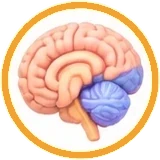
Sits at the back and base of the brain. It coordinates movement, including learned movements such as playing the piano. Research also shows it takes part in thinking and emotion, with the strongest evidence for planning, language, and spatial skills (Schmahmann, 2019; Van Overwalle et al., 2020).
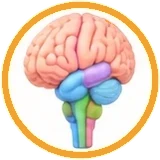
Connects the brain to the spinal cord and controls vital functions such as breathing and heart rate. Its upper part, the midbrain, helps manage some reflexes and eye movements (NINDS).
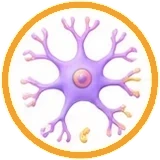
Gray matter is made mostly of neuron cell bodies, where information is processed. White matter is made of long nerve fibers wrapped in a fatty coating called myelin, which carry signals between regions.

The brain is protected by the skull, wrapped in three membranes called the meninges, and cushioned by cerebrospinal fluid that surrounds it and fills spaces inside it.
Each half of the cortex is divided into four lobes. These descriptions follow the U.S. National Institute of Neurological Disorders and Stroke (NINDS):
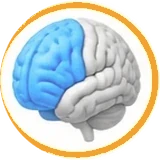
Planning, imagining the future, reasoning, and holding ideas in mind for a short time. The motor cortex, at its back edge, plans and carries out voluntary movement. The front part, the prefrontal cortex, is closely involved in decisions, attention, and managing impulses and emotions.
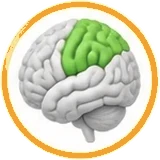
Receives and combines body sensations such as touch, temperature, and movement through the somatosensory cortex. It also supports skills such as reading and arithmetic.
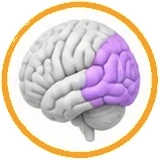
Processes visual information. Damage here can cause vision loss even when the eyes are healthy.
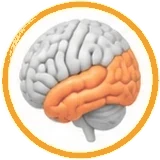
Processes hearing, helps form and retrieve memories, and brings together taste, sound, sight, and touch.
Classic “centers,” such as Broca’s area for speech and Wernicke’s area for understanding language, are better thought of as important parts of wider language networks than as stand-alone switches.
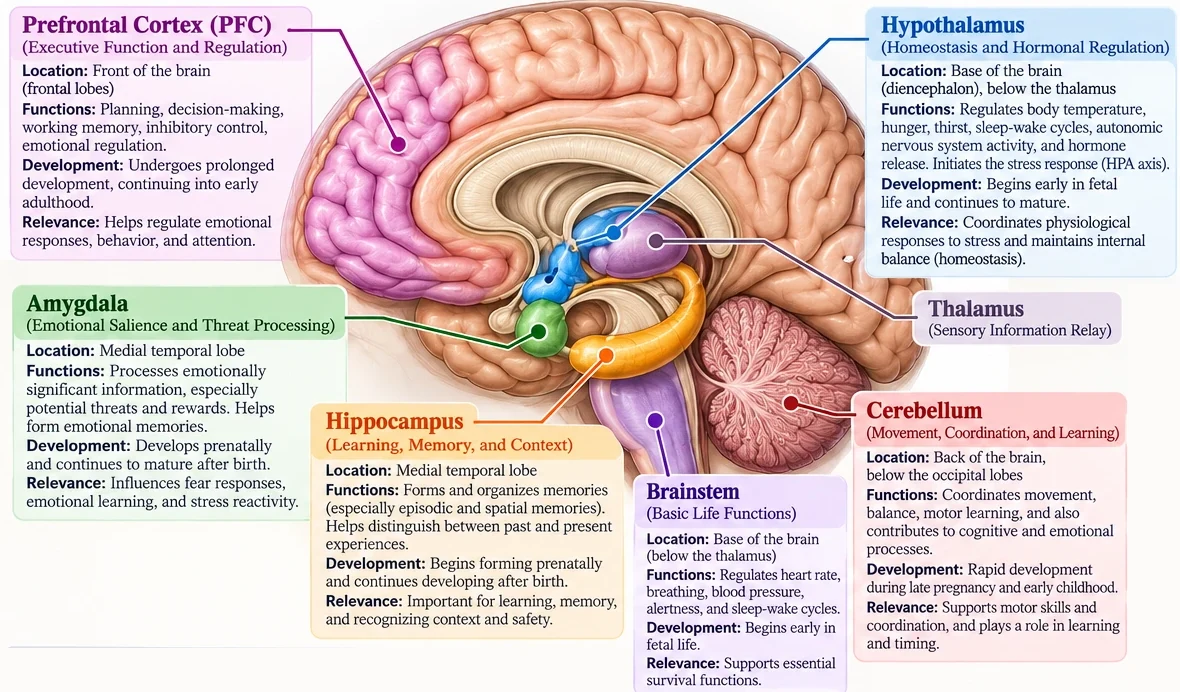
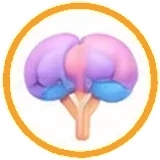
A relay station that passes information between the body and the cerebrum.

Helps regulate wakefulness, arousal, and emotional states. It also controls the pituitary gland, which links the brain to the body’s hormone and stress systems.

Helps move memories into long-term storage and retrieve them. It is involved in learning and in remembering places.

Helps detect and respond to things that matter to you, especially possible threats. Researchers now see it as more than a “fear button.” It responds to many kinds of important events, and the conscious feeling of fear involves wider brain networks.

Initiate and integrate movement. Together with dopamine, they are also involved in habits, motivation, and reward.
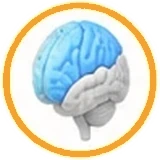
Works with these deeper areas to evaluate situations and regulate emotions. Chronic stress and poor sleep can make this top-down regulation harder, which is one reason stress feels like “losing control.”
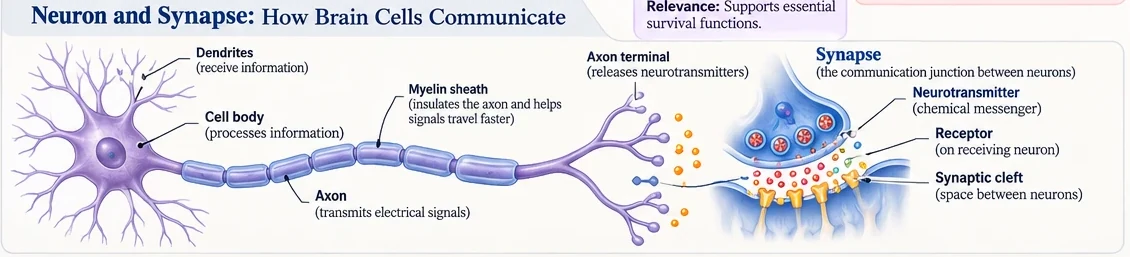
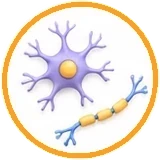
The brain’s main signaling cells. Each has a cell body, branching dendrites that receive signals, and a long axon that sends signals on. Many axons are wrapped in myelin, a fatty insulation that helps signals travel faster and farther.
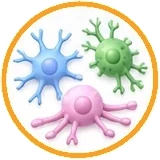
Support cells that surround neurons. Some make myelin, some supply nutrients and regulate the brain’s chemical environment, and some act as immune cells. The old idea that glia outnumber neurons ten to one has been revised: current estimates are about one glial cell for each neuron (von Bartheld et al., 2016).

A synapse is the tiny gap where one neuron passes a signal to another cell. The sending neuron releases chemical messengers into the gap, and they attach to receptors on the receiving cell, which can excite it or quiet it (NINDS).
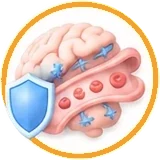
The brain’s blood vessels form a tightly controlled lining that decides which substances can enter brain tissue. It protects the brain, and it is one reason many chemicals made elsewhere in the body, including serotonin made in the gut, do not simply pass into the brain (Profaci et al., 2020; Layunta et al., 2021).
Neurons talk to each other mostly by releasing chemical messengers called neurotransmitters. Hormones, which travel through the blood, also influence the brain. Different chemicals have different jobs, but most work in many places and do more than one thing.
The main excitatory messenger: it speeds up signaling and is central to learning and memory. Too much can damage neurons (NINDS).
The main inhibitory messenger: it slows signaling and helps keep brain activity in balance. Many calming medications act on GABA systems.
Involved in movement, motivation, and learning from rewards. Loss of dopamine cells causes the movement problems of Parkinson’s disease (NINDS).
Involved in mood, sleep, appetite, and body temperature. Most of the body’s serotonin is made in the gut, where it helps digestion (Layunta et al., 2021). See our Food & Brain page.

Raises alertness and attention and is part of the body’s stress response.
Controls muscle contraction and supports attention, learning, and memory. Loss of acetylcholine-producing cells is linked to Alzheimer’s disease (NINDS).
The body’s natural pain relievers, released in response to pain and stress and during vigorous exercise. Whether other pleasant activities, such as laughter, release them is less certain.

Cortisol and adrenaline are mainly hormones rather than brain neurotransmitters, but they strongly affect the brain. Short bursts help you respond to a challenge; long-lasting high levels can affect mood, memory, and sleep.
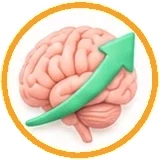
The brain is not fixed. Connections between neurons strengthen with use and weaken without it, which is how we learn, build habits, and recover from some injuries. This ability to change is called neuroplasticity. Experiences, relationships, movement, sleep, nutrition, and therapy can all shape it. Whether adults grow a meaningful number of new neurons in the hippocampus is still debated among scientists.
Understanding the brain can make emotions and reactions feel less mysterious and less personal. A racing heart, a freeze response, or a foggy mind has a biological explanation. It does not mean something is wrong with you. To keep exploring, see Food & The Brain for the gut–brain connection, our Guide to Common Therapy Types, and How to Choose a Therapist. If you are struggling, a licensed professional can help. If you are in crisis, call or text 988 in the United States. Elsewhere, contact your local emergency number or find a helpline at findahelpline.com.
Sources
Within Your Light provides psychoeducation. This page is for educational purposes only and is not medical advice, diagnosis, or treatment. Please talk with a licensed professional about your own health.